

Have you ever paused to consider rice cultivation? This humble grain, a staple for more than half the world’s population, tells a story of nourishment, tradition, and now, a quest for sustainability.
When we immerse into the world of rice, we’re not just exploring a food item; we’re uncovering a rich narrative that spans centuries and continents.
Key Points: Sustainability in Rice Cultivation
- Historical Significance of Rice: Tracing back over 10,000 years, rice has shaped cultures and diets globally.
- Sustainable Practices in U.S. Rice Farming: U.S. farmers have improved water efficiency, using methods like MIRI and AWD to reduce water use by up to 32%.
- Rice and Methane Emissions: Rice cultivation contributes significantly to global methane emissions, alongside livestock and fossil fuel production.
- Global Efforts for Sustainable Rice: Innovations in rice-growing countries like India and China focus on reducing water usage and environmental impact.
- Future Outlook: Ongoing research and strategies are being developed to further reduce the environmental impact of rice farming.
- Our Role in Sustainability: Emphasizing the importance of supporting sustainable practices and being mindful consumers.
The Historical background of Rice Cultivation
Rice cultivation dates back over 10,000 years, primarily in Asia.
But, have you ever wondered how it became such a global phenomenon?
The answer lies in its adaptability and the ingenuity of ancient farmers. From the terraced fields of the Philippines to the vast deltas of the Mekong, rice farming adapted to diverse environments, becoming more than just a crop but a way of life.

Also Read >> Red Snapper Recipe with Mango Salsa & Coconut Rice
Cultural Significance of Rice Cultivation
In many cultures, rice isn’t just food; it’s a symbol of life and fertility. Think about the role of rice in weddings, where it’s often thrown as a blessing for prosperity.
In Japan, the word for cooked rice, ‘gohan’, also means meal, signifying its integral role in the diet.
From the Indian subcontinent to the shores of Indonesia, rice is at the heart of culinary traditions, shaping diets and cultures.
Rice is more than a staple food; it’s a thread that weaves together generations and traditions. But as we step into the modern era, a new chapter in this story emerges – the urgent need for sustainability in rice cultivation.
This brings us to a crucial question:
How can we continue this ancient tradition in a way that honors our planet?
U.S. Rice Industry’s Efforts
So, what exactly does sustainability look like in the realm of rice farming?
It’s a concept that stretches beyond just environmental care—it’s about creating a harmonious balance that supports our planet, economies, and communities.
The 2018 U.S. Rice Industry Sustainability Report sheds light on this very balance.
Here’s what it reveals:
- Land and Soil Conservation: Did you know U.S. rice farming happens on about 3 million acres? Farmers have been adopting practices like reduced tillage, which not only protect the soil from erosion but also help in preserving its nutrients.
- Water Stewardship: Rice, a water-intensive crop, has seen a significant transformation in how water is used. U.S. farmers are utilizing advanced technology to ensure water efficiency. It’s not just about using less water; it’s also about ensuring the water that returns to our ecosystems is clean and healthy.
- Energy and Air Quality: The shift towards sustainable energy use in rice mills, such as converting rice hulls to energy, is remarkable. These practices are reducing the carbon footprint and contributing to cleaner air.
Water
Contrary to the perception of flooded rice fields as wasteful, U.S. rice farmers employ cutting-edge practices that save water, reutilize tailwater, and ensure that the returning water is safe and cleaner than before.
These smart water practices also reduce energy usage, decrease herbicide amounts, and retain nutrients, minimizing runoff into streams and rivers.
Key Statistics and Techniques:
- Multiple-Inlet Rice Irrigation (MIRI): Reduces total water use by 25% and overall water costs by 18%.
- Intermittent Flooding (Alternate Wetting and Drying – AWD): Lowers water use by 32%.
- Furrow Irrigation (Row Rice): Significantly cuts water requirements and reduces evaporation losses.
- Precision Land Leveling: Enhances surface drainage and efficiently distributes irrigation water*.
Tailwater Recovery Systems
Tailwater recovery systems enable farmers to recycle runoff water for immediate or later use, saving money, reducing the burden on aquifers, and providing drought security.
In California, this tailwater flows to downstream users and is reabsorbed into the environment.
Rice as a Natural Filter
Rice plants act as natural filters, cleaning water by retaining sediments and nutrients. Measures like filter strips and riparian buffers are effective in keeping these nutrients on the field, thereby addressing typical agricultural issues like erosion and sediment transport*.
Soil Conservation
Healthy soil is vital for sustainable agriculture. Techniques like crop rotation and minimal tillage enhance soil health, supporting robust rice growth.
These practices not only contribute to the fertility of the soil but also play a crucial role in the overall ecosystem of rice farming.
Air Quality Improvements
The sustainability efforts in the rice industry have significantly impacted air quality and energy usage.
Over a 36-year period, energy use in U.S. rice production has decreased by 34%. Additionally, from 1980 to 2015, the industry reduced its greenhouse gas emissions by 41% per hundredweight of rice produced.
These achievements are a result of energy-saving measures that reduce reliance on fossil fuels and lower greenhouse gas emissions.
Methane emissions compared to other agricultural products
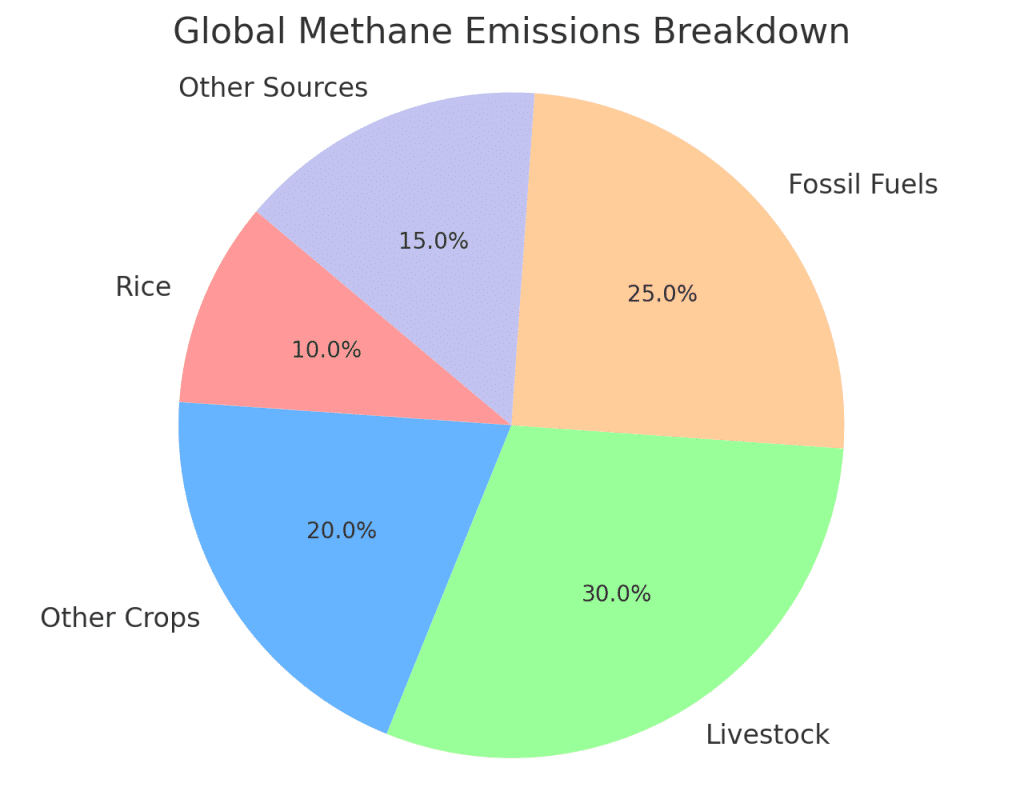
The Carbon Footprint of Rice
Isn’t it intriguing to think about the impact our food choices have on the environment? Rice, for instance, plays a significant role in global methane emissions.
Methane, a potent greenhouse gas, is a byproduct of rice paddies’ anaerobic conditions.
This presents a dilemma for rice enthusiasts and environmentalists alike: how do we balance our need for this staple food with its environmental impact?
Rice Sustainability Around the World
Looking globally, different rice-growing regions approach sustainability in unique ways.
For example, in India and China, there’s a growing emphasis on methods like System of Rice Intensification (SRI), which reduces water usage and thereby methane emissions.
Additionally, these countries are exploring genetic modifications and farming techniques to create rice varieties that are both high-yielding and environmentally friendly.
Future of Sustainable Rice Cultivation
Have you ever pondered what the future holds for sustainable rice cultivation? As we venture forward, ongoing research and innovative strategies are key to reducing the environmental impact of rice farming.
From advanced irrigation techniques to genetically modified crops that require less water, the future is ripe with possibilities.
As we conclude this exploration, let’s reflect on our role in supporting sustainable rice cultivation. It’s a journey we all share, a commitment to a future where our love for rice harmonizes with our responsibility to the planet.
Each choice we make, from supporting sustainable farming practices to being mindful consumers, contributes to a larger narrative of sustainability.


